When the Pipe Won’t Stop Sweating: Wet Surface Epoxy for the Toughest Wet Environments
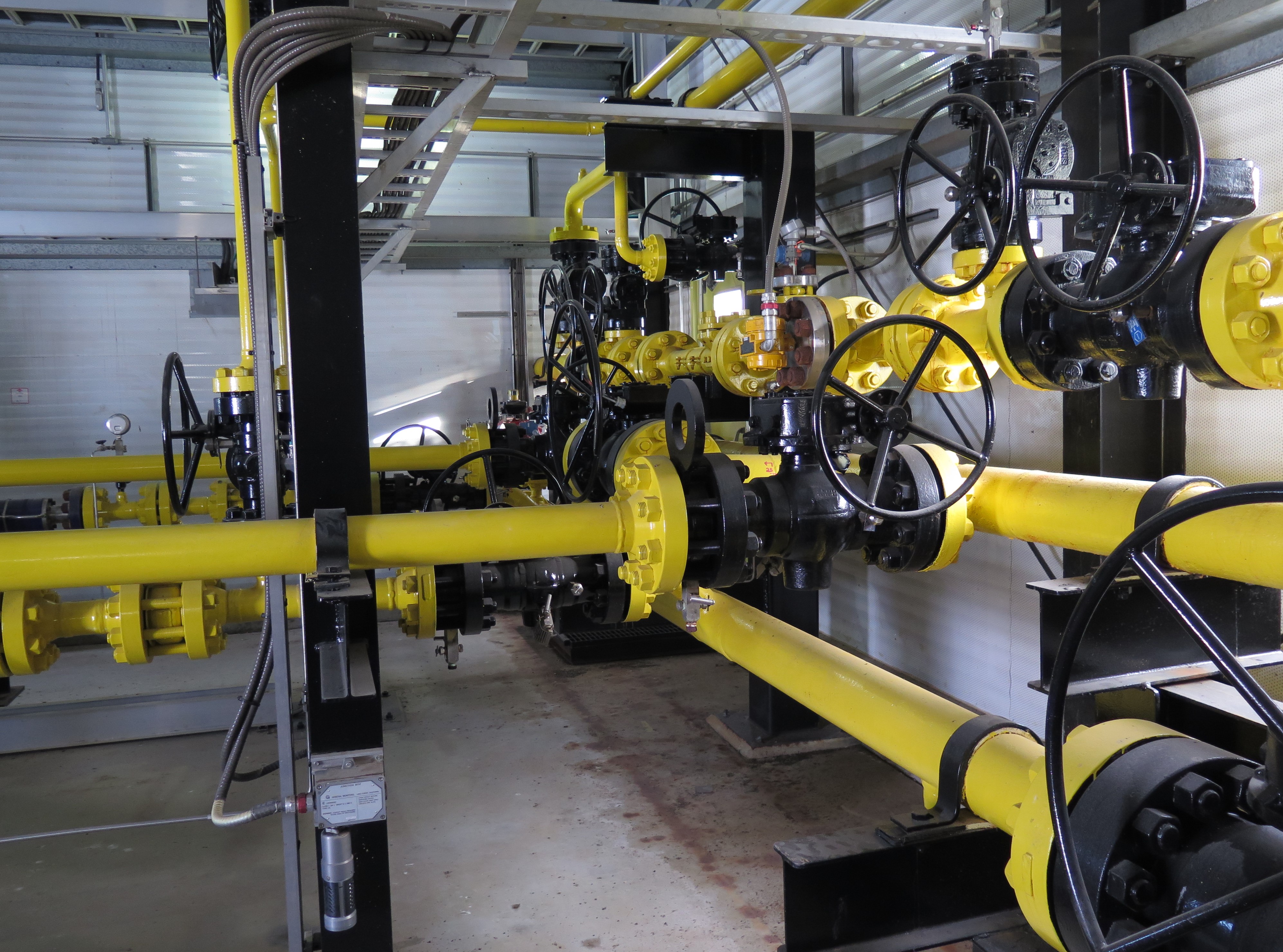
If you’ve ever tried to paint a chilled water line, a condensate return pipe, or the wet end of a paper machine — and watched your coating slide right off — you already know the problem. Standard coatings and wet surfaces simply don’t get along. Surface moisture disrupts adhesion, causes delamination, and turns what should be a straightforward maintenance project into an expensive, recurring headache.
The good news: in many cases, you don’t have to wait for a dry day or a narrow shutdown window. The right wet surface epoxy chemistry is engineered to bond directly to damp and submerged substrates — making surface moisture a manageable condition rather than an automatic dealbreaker.
The Science Behind the Struggle
“Sweating” pipes — chilled water lines, cold ammonia lines, refrigerated process piping — are coated by condensation from the ambient air. Even in a plant running at normal temperature, a cold pipe surface will continuously pull moisture out of the air. Try to apply a conventional epoxy or alkyd coating on that surface and you’re essentially painting over a film of water. The coating has no path to adhesion, and failure is almost guaranteed.
The wet end of a paper machine presents a different but equally brutal challenge. The forming section, press section felts frames, and wire rolls operate in an environment of constant water spray, steam, and chemical exposure. Surfaces rarely dry out between maintenance windows. Downtime is costly. And the corrosion underneath conventional coatings doesn’t care that your next scheduled outage is three months away.
Similar conditions exist across:
- Pulp mill digesters and washers — high moisture, chemical exposure, abrasion
- Chilled water and brine piping systems — continuous condensation, often below dewpoint
- Wastewater treatment structures — constant immersion, splash zones, hydrogen sulfide attack
- Food processing facilities — daily wash-downs, temperature cycling, regulatory demands
- Marine and offshore structures — pilings, piers, docks, etc.
What all of these environments share is a coating system’s worst enemy: moisture present at the time of application and continuously present throughout service life.
Wet Surface Epoxy: The Chemistry That Changes the Equation
Wet surface epoxies operate on a fundamentally different principle than conventional coatings. They are formulated with specialized resin and curing agent combinations that establish a direct bond with the substrate even when moisture is present.
The result is a coating system that works where others fail — on sweating pipes, in active wash-down areas, on wet paper machine components, and in submerged or splash-zone applications.
PC-590 and PC-591: Purpose-Built for These Conditions
Gulf Coast Paint’s PC-590 and PC-591 are wet surface epoxy coatings formulated specifically for the environments described above. These aren’t general-purpose products re-labeled for difficult conditions — they are engineered from the ground up for wet-surface adhesion, corrosion resistance, and long-term performance in high-moisture industrial settings.
PC-590 is a 100% solids, hi-build flake-filled wet surface epoxy designed for damp and submerged applications. Its cycloaliphatic epoxy chemistry and moisture-insensitive polymer allow application on wet or underwater surfaces without compromising cure. PC-590 builds to 20 mils DFT per coat on horizontal surfaces and is well-suited to high-film-build requirements on steel and concrete, including manholes, wet wells, and paper machine components. It also carries USDA approval for appropriate food-related environments and is excellent product for concrete block walls. PC-590 can be applied at a higher DFT than PC-591 and is the preferred choice when maximum film build is the priority.
PC-591 is a 100% solids hi-build wet surface epoxy that shares the same cycloaliphatic epoxy platform as PC-590 but is lower viscosity — making it rollable without any solvent addition. PC-591 offers a longer pot life (40–50 minutes at 75°F), and is available in an antimicrobial formula. It is well-suited for steel surfaces such as pipes, beams, etc and concrete floors and walls.
Together, they offer a two-product system capable of addressing the full range of wet-environment coating challenges that plant maintenance teams face.
Practical advantages for plant operations:
- Apply during plant operation — formulated to bond to damp and wet surfaces without waiting for conditions that may never arrive
- Reduce or eliminate shutdown time for coating projects on wet process equipment
- Moisture-insensitive polymer technology engineered for adhesion to damp and wet substrates
- Recoat windows that accommodate shift schedules, not ideal laboratory conditions
- Field-tested in pulp and paper, chemical processing, wastewater, and marine environments
Application Considerations for Wet Surfaces
Even with a wet surface epoxy system, surface preparation still matters. Surface moisture is manageable but does not substitute for cleanliness. The following practices maximize performance:
Surface cleanliness first. Remove oil, grease, salts, and loosely adhering corrosion products before coating. Wet doesn’t mean contaminated — a clean damp surface is acceptable; an oily wet surface is not. Solvent wiping or detergent washing followed by a water rinse is appropriate for lightly contaminated surfaces.
Anchor profile still required. Wet surface epoxies adhere well to damp surfaces but still benefit from an anchor profile on steel. Abrasive blasting to at minimum SSPC-SP 6 (Commercial Blast) with a 2–3 mil profile is recommended for non immersion applications, and a SSPC-SP 10 (Near White) blast is recommended for immersion and splash zone service. Power tool cleaning to SSPC-SP 11 is acceptable where blasting is impractical.
Do not apply over standing water. “Damp” and “flooded” are different conditions. Surface moisture and condensation are acceptable; pooled water or active water flow are not. Most installers will wipe down the surface with towels or blow off with compressed air prior to coating. When applying underwater, the coating needs to be applied firmly to displace the water.
Temperature affects cure rate. In warmer environments, cure proceeds quickly. In cold conditions, cure slows. Plan recoat timing accordingly and consult the product data sheet for temperature-specific guidance.
The Maintenance Window You Don’t Have to Wait For
Every plant manager knows the calculation: corrosion under a failed coating on a chilled water header, a wet-end frame, or a wastewater clarifier wall doesn’t pause while you schedule the next outage. It proceeds on its own timeline, often faster than you’d like.
The ability to apply a high-performance wet surface epoxy on wet, sweating, or damp surfaces — during operation, without waiting for conditions that may never arrive — fundamentally changes the economics of corrosion control in these environments.
PC-590 and PC-591 from Gulf Coast Paint are the tools that make that possible.
Industry-Specific Coating Solutions
Gulf Coast Paint Mfg. specializes in coating systems engineered for your specific industry challenges. Our team has experience in these industries and can help recommend the proper coating system for your facility. Contact us today at 251-964-7911 or info@gulfcoastpaint.com.
About Us
Gulf Coast Paint Mfg. Inc. is a family owned, third generation corporation located near Mobile, Alabama in a town called Loxley. We have been in business since 1976, and have over 100 years of combined experience and know how in the Industrial Maintenance Coatings field. Corrosion Resistant Coatings and Industrial Paint Systems is what we specialize in. Founded on the strength of technical knowledge and expertise in the Chemical Industry and specifically in Coatings, Gulf Coast Paint Mfg. continues to thrive and grow and is proud of its accomplishments as a formulator and a manufacturer of its own products. We make a complete line of high performing chemical resistant coatings for the protection of steel and concrete surfaces. Included in our line is a group of specially formulated products that are very unique to the coatings industry.
You must be logged in to post a comment.